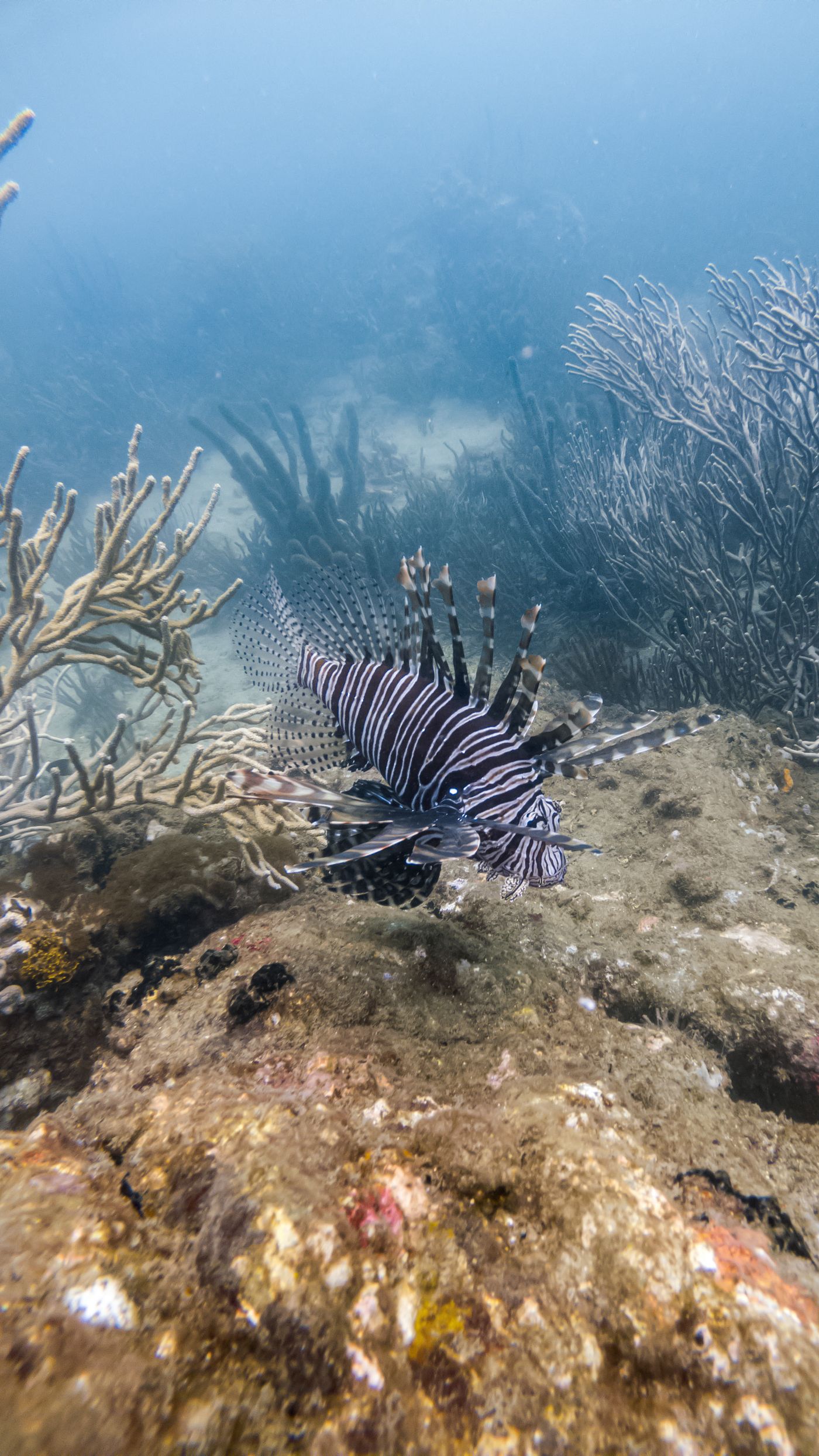
Hovering over a coral shelf at seven metres, I watched a lionfish hunt. It did not chase. It spread its striped fins like a slow fan, herded a cloud of fry against the coral, and inhaled. The whole performance took eleven seconds and looked less like predation than choreography. Then our dive guide tapped her slate: eighteen stomachs sampled, all full, all invasive range.
Lionfish do not belong on this reef — they arrived from distant waters, likely released from tanks decades ago — and yet here they are, thriving beyond any native predator's success. Understanding why turned out to be a lesson in how systems absorb newcomers, for better and worse.
An unfair advantage, honestly earned
The lionfish's success is a catalogue of small edges compounding. Venomous spines mean almost nothing hunts it here. A stomach that expands thirtyfold means it never wastes a lucky encounter. And a breeding cycle that releases tens of thousands of eggs every few days means every setback is temporary. None of these traits is remarkable alone; together they are a masterclass in compounding advantage.
Local divers have responded with derbies — weekend hunts that remove thousands of fish and serve them up dockside. (They are delicious: buttery, delicate, and eating them is genuinely conservation.) The derbies work locally and fail regionally, which is itself instructive — pressure must be constant, or the advantage reasserts itself within a season.
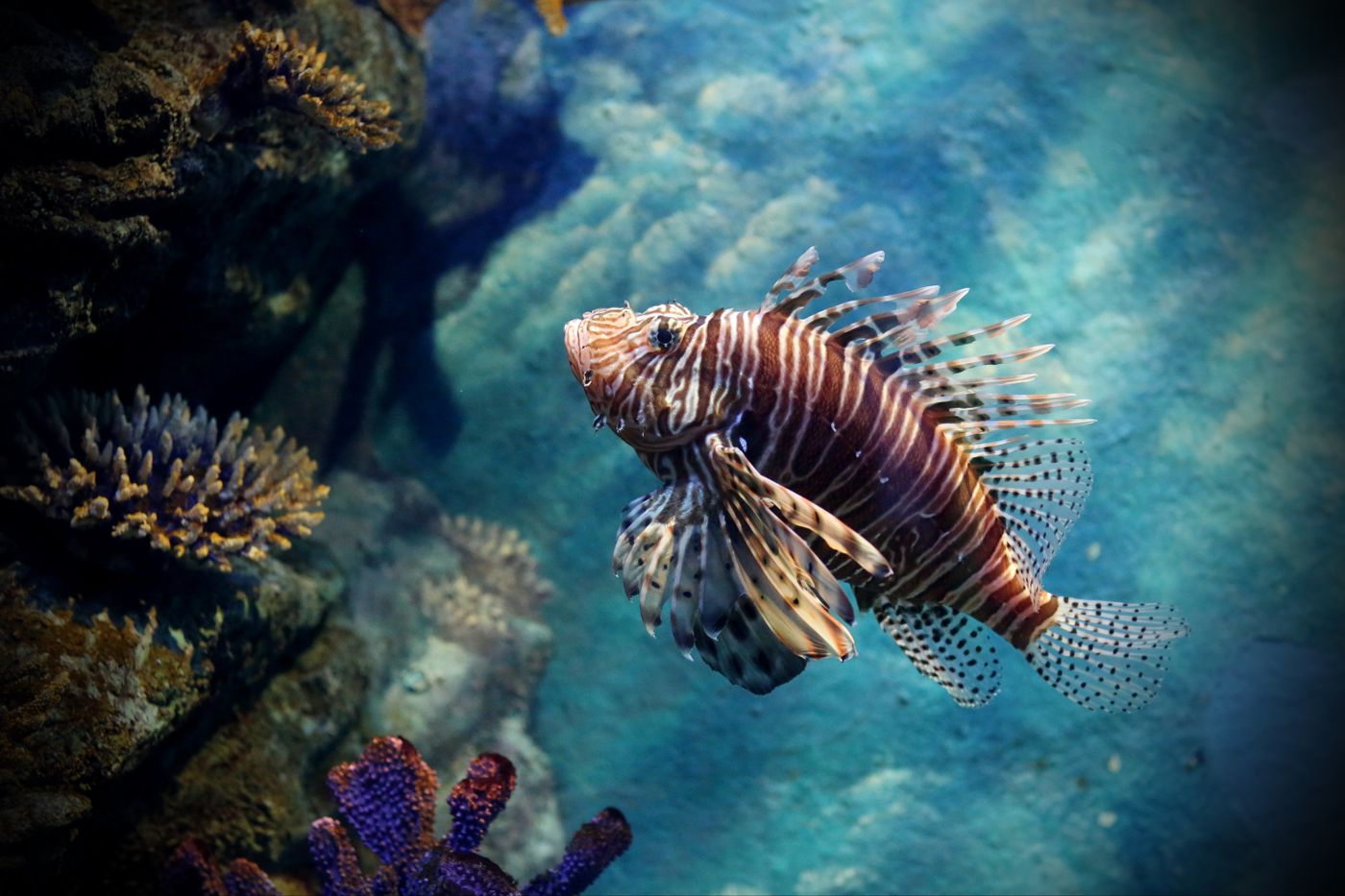
Reef time versus our time
What struck me most was the researchers' patience. Coral thinks in decades; management plans think in funding cycles. The scientists who understand this reef best are the ones who stopped expecting quick victories and started measuring in small, honest increments — a nursery rebounding here, a native grouper returning there.
There is a studio lesson in there, if you want it: sustainable advantages are never one big thing. They are ten small disciplines — showing up, measuring honestly, removing what does not belong — repeated until the system tilts. The reef will not be saved by a hero project. It will be kept, dive by dive, derby by derby, by people who learned to think in reef time.